THE BOWIE KNIFE THAT KILLED DRACULA


“Bram Stoker’s Dracula was killed by a bowie knife?  And by a Texan?  No way!  It was done by a stake in his heart –  right?”

” Wrong!”

In Bram Stoker’s Dracula, first published in 1897, he is indeed killed by a Texan welding a bowie knife.  Obviously, I had not read the book even though I have a copy of it along with Mary Shelly’s Frankenstein that I did read recently.

I subscribe to print and digital versions of Texas Monthly, a magazine that covers all things Texas – politics, art, dance halls, food, music, tourist spots, trends, rodeos, history, tequila,  glamour and grit.  The magazine upholds the pride of a currently red state with a weird blue capitol of Austin without being pompous while poking fun of a state that was once a country and has threatened to secede in recent years.

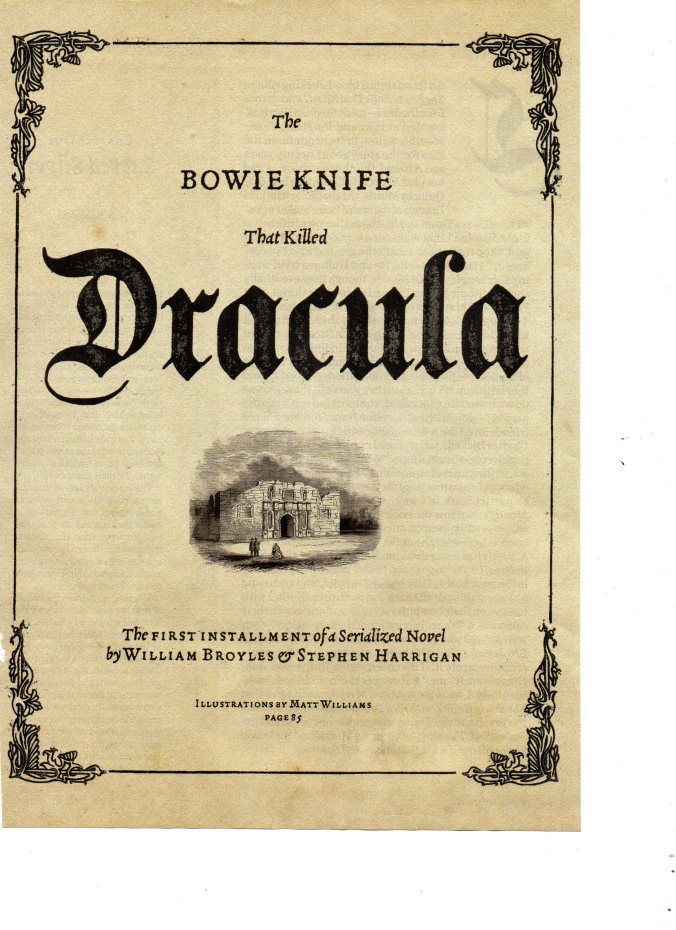
In the October 2025 issue the first installment of The Bowie Knife That Killed Dracula, a novel by William Broyles and Stephen Harrigan, was published.  It is described this way.

“The character who kills Dracula at the end of Bram Stoker’s classic novel is Quincey Morris, a Texan who does the job with a bowie knife.  Our serialized novel tells his story – and that of his famous  blade.”

I anticipate each new chapter that comes out every Saturday and I have started reading Bram Stoker’s novel.  It is rather like reading parallel novels.  Here is a link to the first installment.

Now Texans have something else to brag about!  And the bowie knife has a worthy history of its own.


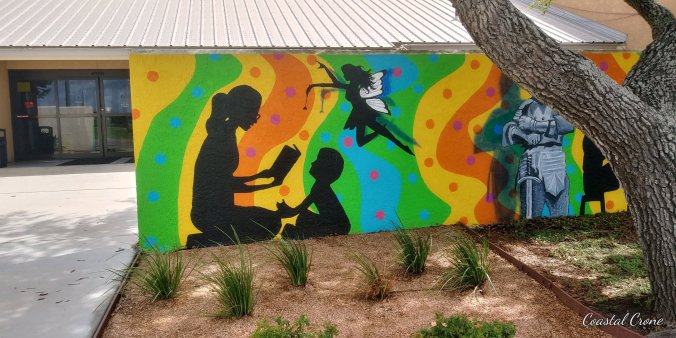
FRIDAY FOTO: LIBRARY MURAL


PERSONAL NOTE:  It seems I have been mostly absent from WordPress since late July.  Husband and I got COVID, thankfully it was mild, and then Husband experienced a medical emergency that involved two hospitalizations, blood clots and a fractured ankle.  He is home now and recuperating well.  I venture back into the blogging world with this Friday Foto and look forward to visiting my blogging friends again.  TGIF!

Portions of mural on the outer walls at the entrance of the local public library (Portland, Texas) by artist Cameron Walls completed in 2024.


FRIDAY FOTO: ODDS AND ENDS AND CHECKING IN


DESERT BIRD OF PARADISE BLOOMING AT BRIAR COTTAGE SPRING 2024

It seems I have taken an unannounced and unplanned break from posting on my blog.  I slowed down for the holidays and then continued to coast along happily reading blogs I follow.  Then suddenly it is past spring and past the total eclipse that raced across Texas.  Hurricane season before I know it.

TOTAL  ECLIPSE:  It was too cloudy here to see it but I am more of a moon watcher.  Give me a full moon rising to watch  and I am enchanted.  No glasses required.

TAXES:  I volunteered again for Volunteer Income Tax Assistance (VITA) through United Way of the Coastal Bend one morning a week during tax season.  Most of the returns are uncomplicated with income limitations, but there is always some new  change in a tax law or a circumstance I have not seen before to challenge me.

ONE BOOK LEADS TO ANOTHER BOOK:   While searching for a fiction book to download, I found The Library of Burned Books set in WWII involving three women whose stories intertwine. That lead to a non-fiction book, When Books Went to War: the Stories That Helped Us Win WWII.   I think I will read the non-fiction first ; it will require a trip to the library.

BANNED BOOKS:  I support and join librarians  and those who are against banning books.  May we remember what happened when books were burned in Germany under Hitler.

I will close with a quote from Mary Oliver’s poem,  “The Summer Day”.

“Tell me, what is it you plan to do
with this wild and precious life?”

NOW AVAILABLE IN EBOOK!


Death’s Garden Revisited, essays on personal relationships with cemeteries, is now available on Amazon in digital form.  The essays are accompanied with beautiful full-color photographs.  Click here to view or order.  I am pleased to have my essay, “Crossed Fingers,” included with 40 other authors.

It is also available in hardback and softcover from Blurb.

DEATH’S GARDEN REVISITED KICKSTARTER INTERVIEW WITH EDITOR LOREN RHOADS


Today I am interviewing Loren Rhoads, editor of the first Death’s Garden and author of 199 Cemeteries to See Before You Die and Wish You Were Here: Adventures in Cemetery Travel. She has put together a second edition titled Death’s Garden Revisited, a collection of new essays by over 40 authors who share their personal relationships and experiences with cemeteries. The book went live on Kickstarter March 17. FULL DISCLOSURE: I am excited to have an essay included in this book!

Welcome, Loren! For those who are not familiar with Kickstarter, please explain what it is and how it works for Death’s Garden Revisited.

Kickstarter is a website where creators, including small presses, can raise funding for a project before it’s created. In this case, Automatism Press had the money to publish Death’s Garden Revisited as an oversized paperback with black and white photographs, but I wanted to produce a full-color hardcover book. I hoped to raise enough money for that by taking preorders for the book through the Kickstarter campaign.

As it turned out, Death’s Garden Revisited sold enough copies on its first day to make the transition to full-color.

Have you ever used it before for a book or a project? And why did you choose it this time?

I’ve helped to fund a lot of projects on Kickstarter before: story anthologies, history books, comic books, new magazines (several of which I later went on to write for), even a couple of cemetery history books.

I’ve never tried to raise money for a project of my own that way before, but it turns out I know a whole lot of people who have. They gave me great advice.

I chose Kickstarter this time because I hoped to build some excitement for Death’s Garden Revisited before it comes out in October. With the help of everyone who has preordered, Automatism Press can afford to make the book I really want to make.

How long have you seen writing about cemeteries and how did you get started?

Oh, my goodness, a long time! I edited the first Death’s Garden book – Death’s Garden: Relationships with Cemeteries – in the early Nineties That book started when a friend who was dying gave me a box of photographs he’d taken in cemeteries as he traveled. Before that, it hadn’t ever occurred to me that people would want to visit cemeteries on vacation. Blair inspired me to seek out cemeteries myself, which led me to writing a monthly column for several years about traveling to visit cemeteries. I gathered those columns in my first cemetery book, Wish You Were Here: Adventures in Cemetery Travel.

Death’s Garden Revisited will be my fourth cemetery book. The fifth one – Still Wish You Were Here – is going out as a bonus to people who preorder Death’s Garden Revisited.

Tell me about some of the backgrounds of some of the contributors. Do they write mainly about cemeteries or do they write in other genres?

There is such a wonderful variety of them! Carol Tyrrell, Joanne Austin, and Rachelle Meilleur all write cemetery blogs. Sharon Pajka just published a wonderful book called Women Writers Buried in Virginia. M. Parfitt worked as cemetery tour guide. Paul Stansfield is a contract archaeologist who has helped to move several cemeteries.

Other contributors are historians and travel writers. Erika Mailman has written a novel about Lizzie Borden. Anne Born has written about walking the Camino de Santiago. Trilby Plants has written thrillers and children’s books. Rain Graves taught tango in Argentina. A bunch of the contributors are horror writers.

When is the book coming out? In what form? And where will be available?

Death’s Garden Revisited will be out in October 2022. It will be available in hardcover, an 8 x 10-inch paperback and e-book. I know it will be available on Amazon, but I’m still working out the distribution everywhere else. The complication is that I’m not working with my regular printer this time, because of the color photos.

People can bypass all that by preordering their own copy on Kickstarter now. Then the book will magically appear in the mail in October!

Thank you, Loren! Here is the link – check it out. https://www.kickstarter.com/projects/lorenrhoads/deaths-garden-revisited-relationships-with-cemeteries The campaign ends April 16.

Here is a link to Loren’s Cemetery Travels site. https://cemeterytravel.com/about/
and her author’s page.https://lorenrhoads.com/

HAPPINESS, COURAGE, STRENGTH, & A SENSE OF HUMOR


Courage, strength and a sense of humor will help get me through almost anything in my opinion. Years ago I read Lindbergh’s book of poetry and essays, Gift from the Sea, but did not know much about her beyond the kidnapping of her baby and the fame of her husband, Charles Lindbergh. A little recent research revealed she was an accomplished woman on her own and had to deal with her share of tragedy, loss and betrayal. I may have to read a biography written by Susan Hertog, Anne Morrow Lindbergh: Her Life.

Books and Movie Trailers


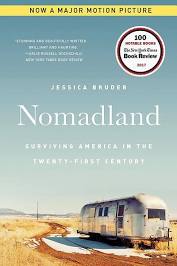
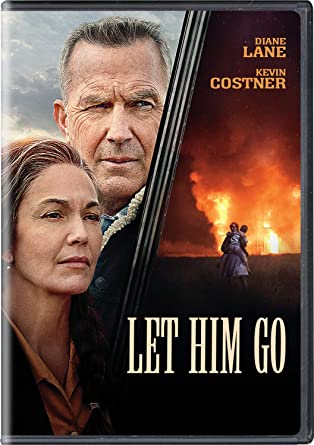
Recently I found two digital books that I could download to my Kindle from our local library.   Both had been made into movies:   Nomadland: Surviving America in the Twenty-first Century and Let Her Go.


Now every time I receive a package from Amazon, I wonder if some tired retiree from an rv camp had some part in it.  The book, written by journalist Jessica Bruder, follows (literally at times in her own van) real-life nomad Linda May,  a 64-year old grandmother, who found going on the road a last choice after she lost everything in the Great Recession.  It is written in documentary  style.  Some of the travelers find seasonal work at rv parks, national campgrounds and Amazon warehouses.  Apparently Amazon likes older workers because they are dependable, don’t demand much and are willing to  work part-time in conditions that are not ideal for senior citizens:  fast-paced where employees are tracked for efficiency.

The movie, directed by Chloe Zhao, is a fictionalized version of the book.  The main character, played by Frances McDormand, is purely invented and she plays on the background of real characters and events from the book.  There are three characters from the book who play themselves in the movie including Linda May who is the one the author mainly followed.  Scenes from working at Amazon are filmed in a real Amazon warehouse; Amazon fares better in the movie than in the book in my opinion.  I have not seen the movie and only read reviews about it and viewed the trailer.   Here is a link to the movie trailer –  https://www.youtube.com/watch?v=6sxCFZ8_d84

Let Him Go, written by Larry Watson and published in 2013, is a novel set in  South Dakota and Montana in the 1950s.  The opening chapter has the wife packing to go somewhere on a mission: husband (a retired sheriff) is given the option of going along.  He opts to go even if it means walking off a job that is below his skills.  Their son had died a few years before and his widow had remarried soon after, taking their young grandson with her and the new husband.  The grandmother learns that all is not well with the child in his new environment with the domineering  step-father.  Determined not to lose contact with the child, protect him if necessary and even bring him back, the couple takes off.  The husband is reluctant but goes along to support his wife.  Diane Lane  and Kevin Costner play the grandparents in the movie.

From reading reviews and watching the movie trailer, the movie appears to follow the book closely.  I have not seen this movie either.  Here is a link to the movie trailer – https://youtu.be/GfMkjdIc24I

Do you prefer to read the book first and then see the movie or see the movie and then read the book?  Or do you think one version is enough?  I always think the book is better.  Some movies make me want to do more research if it involves history.

LOVE IN THE TIME OF CHOLERA


“Love in the Time of Cholera”
by Gabriel Garcia Marquez

The title of this book by a Colombian Nobel prize author has been running through my head like a song ever since this virus hit our shores.  Weird, I know.  Of course,  it is not cholera or a plague but it has become a pandemic.

Published in Spanish in 1985 and into English in 1988, it is not about cholera at all and cholera was not even mentioned until late in the book.  Rather is is about love, marriage, aging and the inevitably of death as the destiny of us all.  Two young lovers, platonic only, are pulled apart by family and the girl eventually marries an older man.  They never completely lose touch over the years and reconnect when the husband dies.

It is not an easy read, but perhaps I should go back and read it again since it seems to haunt me in this life in the time of OVID19.

Husband and I are doing well as we hunker down at home in Briar Cottage.  We have the usual stock of groceries and are prepared as we would for hurricane season that starts June 1 .  I may have slipped in some extra bottles of wine.

This virus has touched all of our lives with a common thread all across the country and even to the rest of the world.  Suddenly we all face the same threat on a global scale.  The OVID19 knows no borders.  There will be pain and loss.  Life will not go back to the way it was when this pandemic ends.  Yes, we are apprehensive about the unknown and fearful about the financial impact too.  That is normal.  But we are strong together and will get through this.

May we learn from it and never take even the ordinary and routine for granted:  handshakes… hugs… going to work…enjoying a concert… sitting down in a restaurant…visiting a nursing home… exploring a museum…dropping kids off to school…shopping at Macy’s… grocery stores filled with everything we need…  gathering with friends and family in any number… and the list is endless.

Perhaps we did need a time out to be shaken from our complacency to look around and be grateful for what we have.  May the divisions that have been dividing this country be replaced with civility and the acknowledgement that we are all in this together.

Maybe love is the answer in the time of OVID19.  Take care of yourself, help others when you can and don’t lose hope or your sense of humor.  Cheers!

DEATH CLEANING AND MORE


No, I am not dying.

It all started with having the outside hurricane roll-up shutters removed; then all the windows were replaced with double-pane hurricane windows.  Some of the window sills inside in the living room and dining room needed repair which would require painting.   We might as well have those rooms painted; if we did that we might as well have the kitchen and cabinets done and that led to the entrance, hall, bedrooms and bathrooms.  OK, the whole house needed painting inside.   Before we could have it painted, we needed to address a couple of cracks in the doorway of the bathroom in our bedroom.  That required foundation work according to an engineer. 

Thus began our adventure in home repair!  Remember the movie, The Money Pit, with Tom Hanks?  Two weeks!  Some days we felt as if we were living in that movie.

A crew came to do drywall repair inside before the painters came.  For that we took everything off the walls, moved small furniture to the garage and pulled the furniture that was left to the middle of the rooms.  I also had to unload my book cases and box a lot of stuff.

That brings me to death cleaning . In  Margareta Magnusson’s book, The Gentle Art of Swedish Death Cleaning:  How to Free Yourself and Your Family from a Lifetime of Clutter, she explains that in Sweden “there is a kind of de-cluttering called döstädning, meaning ‘death’ and städning meaning “cleaning.”  It implies disposing of a loved ones things when he or she dies but also means making life easier for yourself by keeping less and realizing possessions may not be that important.

After forty-two years in the same house, we have accumulated a lot stuff!  It has been like moving in place as we evaluate what we want to keep and what should go.  I am sentimental and want to keep everything yet I truly want to de-clutter. Two bookcases and one wine rack were the first to go.  Daughter and Son will each take one of my father’s clocks.  Who will want that wooden art that I brought back from Nassau years ago?  They will probably fight over it.   I let go of some books but can’t l can’t part with most of my old friends, especially my collection of Victor von Hagen and John Lloyd Stephens books.

The house was new when our family of four moved in forty-two years ago.  It  now has new windows, a stronger foundation and new paint inside.  And perhaps less clutter and a fresher look.  But the memories will remain – holidays, birthdays, challenges, loss, triumphs, laughter, tears, dreams, anger, rebellion, love, joy, peace and most of all hope for the future.  Cheers!

(In her blog, “Muddling Through My Middle Age,” Ann Coleman  wrote about helping to move her mother from a home with generous space to a one bedroom in assisted living.  She titled it:  Moving Forward.  Getting rid of “stuff” was not as easy as she expected.)


BOOK: “THE TRAIN TO CRYSTAL CITY”


Here is a quote from the jacket of the book, The Train to Crystal City by Jan Jarboe Russell.

“From 1942 to 1945, secret government trains regularly delivered civilians from the United States and Latin America to Crystal City, a small desert town at the southern tip of Texas.  The trains carried Japanese, German and Italian immigrants and their American-born children.  The vast majority were deeply loyal to the United States, were never charged with any crime, and did not understand why they had been forced to leave their homes.

The only family internment camp during World War II, Crystal City was the center of a government prisoner exchange program.  During the war, hundreds of prisoners in Crystal City, including their children, were exchanged for other ostensibly more important Americans – diplomats, businessmen, soldiers, physicians and missionaries – behind enemy lines in Japan and Germany.”

Growing up in South Texas about one hundred miles from Crystal City, I had visited this small town with my parents but never knew that it had been home to an internment camp that some called a concentration camp. 

Those internment camps for the Japanese got more attention in the history books.  These immigrants had committed no crime but were still detained and held behind a 10-foot high fence as if they were prisoners.  In time it came to resemble a small town with stores, churches, schools, libraries, a hospital and a swimming pool.  Families lived in small one-family cottages.  While the detainees were treated well, they were still the equivalent of prisoners.

 Russell interviewed more than fifty survivors and gained access to private journals, diaries, FBI files, camp administration records and more.   Through her research she follows the camp from opening to closing and provides detailed descriptions of daily life in the camp.   One focus was on two American-born teenagers, one Japanese and one German, and how they were affected by the camp, their repatriation to Japan and Germany and finally the choice they made to return to the United States.   

During the war some were released, paroled or repatriated; others were kept for the duration of the war.   The camp was finally closed in 1946.  

The author  has also written a  biography,  Lady Bird:  A Biography of Mrs. Johnson.

—————————————————

After I learned of this little known part of the history of WWII and the part this remote Texas town played in the drama, I wanted to visit Crystal City again after all these years.   Husband and I drove to Crystal City one cold November day and on our way passed through the small Texas town of Freer where I grew up.  The first stop was in Crystal City at the Popeye statue; more people probably know that the city claims to be the Spinach  Capital of the World than that there was once a camp for alien enemies outside of town. 

Since the former camp is not exactly a tourist attraction, we stopped at the local library to ask directions.   A young woman gave us directions and informed us that there was not much to see but there there some markers.  We followed the directions toward the edge of town and passed several public school campuses.  The pavement ended and we were on a dirt road.

The area was marked by these simple wooden information signs describing the site; I had expected something more than these humble, almost reluctant, reminders of history.  Although we did not find it that day (it was cold!), there is a stone marker that reads, “World War II Concentration Camp 1943-1946” installed in 1985.  In 2014 the site was listed on the National Register  of Historic Places.  Wikipedia has a photo of the stone memorial and more information.

A marker with a “you are here” on a map of the former camp.  Note that it was described as “American Enemy Alien Internment” while photos appear to  more like people at  a summer camp enjoying swimming, diving and other activities.
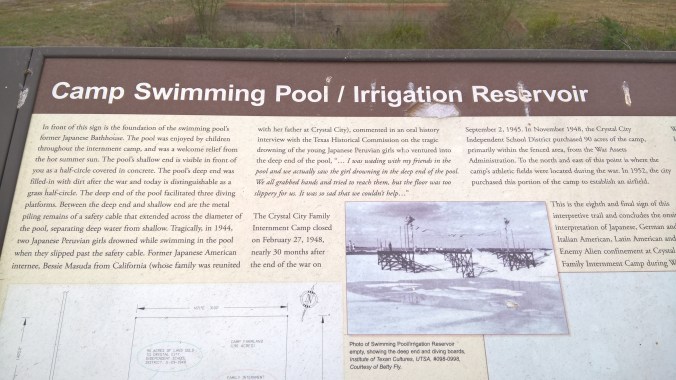
Description of the reservoir that was converted into a swimming pool.
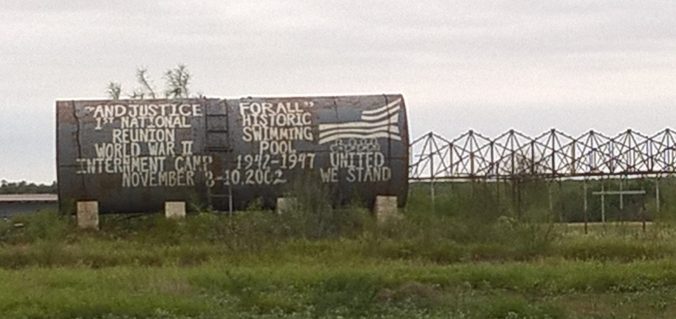
This seemed to be a tank used to mark a reunion of survivors of the camp and the site of the swimming pool.

The area is quiet today with nothing but a few foundations to remind us of what had been outside this small Texas town south of San Antonio.   It is rough flat country with heat and sun and dust, just miles from the border of Mexico.  What must have those families have thought when they arrived?  How did they face the unknown with no control over their fate?  How did they feel about the  government of the United States?

There are lessons to be learned from this period even today as the loyalty and patriotism of some immigrants is sometimes questioned.  We saw the reaction when we were attacked on 9/11.  Some of that fear still lingers.

Related books:
The Crystal City Story:  One Family’s Experience with the World War II Japanese Internment Camps by Tomo Izumi (non-fiction written by a survivor of the camp)

The Last Year of the War by Susan Meissner (historical fiction)