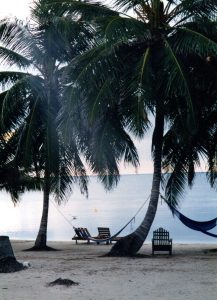
Gulf of MEXICO


On inauguration day President Trump, with a flourish and a smile, signed one of many executive orders. The White House touted the order as “Restoring Names That Honor America’s Greatness.”  This one combined name changes for the largest gulf in the world  and the highest peak in the United  States.   Mount Dnali was once again Mount McKinley  to honor President William  McKinley.  The Gulf of Mexico was henceforth to be called Gulf of America to honor America’s greatness.  All government references were to comply; Google and others soon would reflect both new names. These changes will not solve any world problems, but it apparently made the President happy to be able to do so.

Granted, President Obama in 2015 pleased Native American Indians by renaming Mount McKinley to honor Native Americans Indians who had  traditionally referred to it as Dnali.  The state of Alaska had  requested the United States government for the name change in 1975 but was denied.

And what about that body of water known for five hundred years as the Gulf of Mexico and shared by the US, Mexico and Cuba who all claim some territorial rights?  As a coastal crone I live on the Texas Gulf Coast on Nueces Bay and a few miles from the Gulf of Mexico.

Texas shares the Gulf with three other states and the countries of Mexico and Cuba.  It provides rich marine life, tourism. off shore drilling. and more.  During WWII German U-boats were sunk in its waters.  We worry when there is an oil spill or leak.  All eyes are on The Gulf during hurricane season.  We worry about pollution along our coastlines.  We share a long and rich history including battles, disputes and pirates.  The Republic of Texas had its own navy for a time.

The Associated Press (AP) continued to refer to it as the Gulf of Mexico and as a result has been denied access to some presidential events in the White House and Air Force One.  The AP has been the standard for style for years.  A lawsuit to end the ban is pending.

It seems we are beginning to be governed by daily executive orders.  For now most of us will probably continue to just call it “The Gulf,” but everyone knows we mean the Gulf of Mexico!
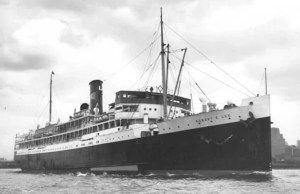
The Shared Fate of the Robert E. Lee and the German U-166


German submarines posed a threat not only to ships crossing the Atlantic, but also to ships in the Gulf of Mexico. Between 1942 and 1943 approximately 70 ships in the Gulf of Mexico and off the coast of Texas were sunk by the German U-boats as they roamed the Gulf.

The passenger-freighter Robert E Lee had left Trinidad and was headed to Tampa when it was diverted to New Orleans. On board were passengers it had picked up from two other ships who were hit by torpedoes and was heading to New Orleans with an escort, USS PC-566.

The Robert E. Lee

On July 30, 1942 the Robert E Lee was hit by a torpedo fired by a German submarine or U-boat. The ship began to list and sank within fifteen minutes beneath the waters of the Gulf of Mexico about fifty miles from the mouth of the Mississippi River. Most of the of the passengers and crew were able to escape in life boats or with life jackets. One officer, 9 crewmen and 15 passengers of were lost. (total of 283 passengers were on board.)

The escort ship, USS PC-566 fired depth charges in the area where signs of it had last been seen. Soon after an oil slick appeared; it was assumed that the U-boat had been hit and destroyed. It and other boats in the area aided in the rescue of passengers and crew.

German U-166

In July of 2014, nearly 72 years later, stunning photos of the two wrecked vessels were released. The scientific ship, Exploration Vessel Nautilus had been checking for damage from the BP oil spill in 2010 when the scientists aboard came upon the wrecks only a two miles apart. Two remote operated submersible vehicles equipped with cameras captured clear images of both sites. Designated as war graves the casualties from World War II, they will not be disturbed.

Below is an excellent link put out by the scientific organization that took the photos. The images of the Robert E. Lee and U-166 are haunting.

A Tale of Two Wrecks: U-166 and SS Robert E. Lee

Thanks to blogger Brad Purinton for the inspiration for this post.  In a comment he left on my “Sand Pounders” post, he mentioned this incident. His father who was a child living in New Orleans at the time and remembered stories of German submarines near the mouth of the Mississippi His blog, Tokens of Companionship, features portrait photos from 1839 to 1939. Check it out here.